
One Health and Care is the confidential shared care record for people registered with a GP in the Black Country, West Birmingham, Shropshire, Telford and Wrekin, and Staffordshire and Stoke-on-Trent.
It allows health and care professionals directly involved in your care to view relevant information about you, so they can treat you quickly and safely.
One Health and Care may also be used to plan and improve local health services using a version of your information with personal details removed.
If you are registered with a GP in these areas, NHS Black Country Integrated Care Board would like to know:
– How much you already know about One Health and Care.
– How you feel about your information being used for planning purposes.
– If you have any feedback on how these changes, including the process for requesting that your details aren’t shared, are being communicated.
Please complete the survey, which will close on Friday 20 November 2026.
(If you would like a copy of the survey in an alternative format or assistance to complete the survey, please contact the involvement team on involve.blackcountry@nhs.net or call 0121 612 1447.
Find more about One Health and Care on your local Integrated Care System website.
West Midlands Mayor Richard Parker visited Forward Carers to meet unpaid Carers from across the region, hear their personal experiences and learn more about the challenges they face, particularly when balancing caring responsibilities with employment.
We were delighted to welcome Richard Parker, Mayor of the West Midlands, to our Forward Carers office, where he had the opportunity to learn more about our work supporting unpaid Carers and our commitment to creating Carer Friendly Communities.
Most importantly, the visit gave unpaid Carers a valuable opportunity to share their experiences directly with the Mayor, highlighting both the challenges of caring and the enormous contribution Carers make to families, communities and the wider economy.
We invited Carer representatives from Birmingham, Dudley, Walsall and Sandwell to share their stories. Richard was particularly keen to understand how caring responsibilities had affected their careers, financial security and personal wellbeing.
The Hidden Impact of Caring on Employment
The visit came just a day after Carers UK released new research highlighting the significant impact unpaid caring has on employment.
An estimated 1.1 million people have left employment to provide unpaid care over the past two years – equivalent to 1,500 people every day. The research also revealed that one in five UK employees (20%) now has a caring responsibility.
These figures reflect the difficult decisions many Carers face, often having to reduce their working hours, put their careers on hold or leave employment altogether to support someone they love.
For the Carers meeting the Mayor, these statistics were more than just numbers. They reflected their own lived experiences.
Anne, a Birmingham Carer, shared how she had to leave her career as a primary school teacher to care for her two disabled children.
Angela, from Sandwell, spoke about sacrificing her promising career as a headteacher to care for family members.
Alun, from Walsall, explained how he had to leave his nursing career to become a full-time Carer for his wife.
Marilyn also shared her experience of leaving her job with a pharmaceutical company after her husband was diagnosed with dementia.
Each story highlighted the personal, professional and financial sacrifices unpaid Carers make, often with little recognition.
Alun’s Story: From NHS Nurse to Full-Time Carer
Alun spoke openly with the Mayor about how becoming his wife’s full-time Carer changed his family’s life.
Alun said:
“My wife became ill about 20 years ago and eventually had to leave her job. It’s a chronic condition, so there are days when she needs a lot of care and days she doesn’t need so much. It had a massive effect on our lives, especially when our two children were growing up.
“They took on the role of young carers and I tried to make sure they didn’t miss out on their childhood. Family and friends were also happy to help. When I eventually had to give up work myself to care for her full time, we went from two wages to no wage and that hit us financially. There’s also the social isolation and the benefits system is tricky and stressful to navigate.
“I was proud to be a nurse but it can hit you hard when it’s suddenly you on the receiving end of care. Forward Carers have been really good. As well as the advice there’s also peer support. I go to a men’s group where we chat about football and music, help each other, and there’s also days out too.”
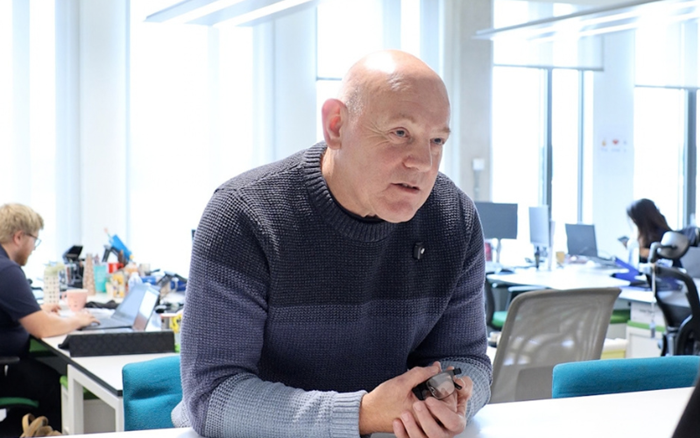
Alun’s experience highlights how caring can affect the whole family, from financial pressures and social isolation to the impact on children who take on caring responsibilities themselves.
It also demonstrates the importance of having access to advice, understanding and opportunities to connect with others who share similar experiences.
Recognising the Contribution of Unpaid Carers
Following his conversations with Carers and the Forward Carers team, Mayor Richard Parker acknowledged the importance of recognising and supporting those who provide unpaid care.
The Mayor said:
“Thousands of unpaid carers like Alun and Marilyn quietly go about their responsibilities with a selfless commitment that should be recognised, not penalised by locking them out of opportunities.
“Many of the staff and volunteers I met at Forward Carers have been Carers themselves, so they understand the barriers people face when someone else relies so on them for support.”
The Mayor’s comments reinforce the importance of ensuring that unpaid Carers are not disadvantaged because of their caring responsibilities, particularly when it comes to employment, financial security and access to opportunities.
We were also delighted to welcome Pat McFadden MP, Secretary of State for Work and Pensions, who happened to be visiting the same site where our head office is based.
His visit provided a further opportunity to highlight the impact of unpaid caring on employment and the importance of ensuring Carers receive the recognition and support they deserve.
Making Carers’ Voices Heard
At Forward Carers, we believe that Carers should be at the heart of conversations and decisions that affect their lives.
This visit was an important opportunity for Carers to speak directly with regional leaders about their experiences, the barriers they face and the changes that could make a meaningful difference.
We would like to thank Richard Parker and Pat McFadden MP for taking the time to listen, and especially Anne, Angela, Alun and Marilyn for sharing their experiences so openly.
Their stories are a powerful reminder that unpaid Carers should never have to choose between caring for someone they love and protecting their own future.
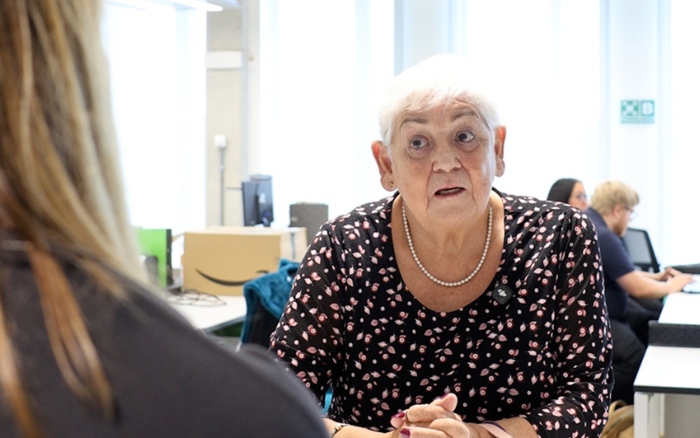
The photo opposite shows Marylin, a Carer registered with Dudley’s Adult Wellbeing Service sharing her story.
Support for Working Carers: Know Your Rights
Are you balancing paid employment with caring responsibilities?
Our free online Support for Working Carers: Rights at Work sessions can help you better understand your rights and the support available.
The sessions cover:
- Carer’s Leave and your employment rights
- Support available to working Carers
- How to approach conversations about caring with your employer
- Ways to help balance work and caring responsibilities
We offer lunchtime and evening sessions to make it easier for working Carers to attend.
Book your free Support for Working Carers session
Share Your Voice – Help Shape the Future of Carer Support
Would you like to share your experiences and help influence the services, policies and decisions that affect unpaid Carers?
Just like Anne, Angela, Alun and Marilyn, you can make your voice heard through our Carers Voice programme.
By getting involved, you can share your views, highlight the challenges Carers face and help us work towards more Carer Friendly Communities.
Together, we can help ensure unpaid Carers are recognised, valued and supported across the West Midlands and beyond.
You can hear more about Alun and Marylin’s lived experience of caring by clicking the relevant link.
Here at Dudley Carers Service, we know the importance of ageing well, helping people to stay happy, healthy and connected.
Whether you are worried about someone you are Caring for, or looking for an opportunity to learn more yourself, the Ageing Well Festival is for you.
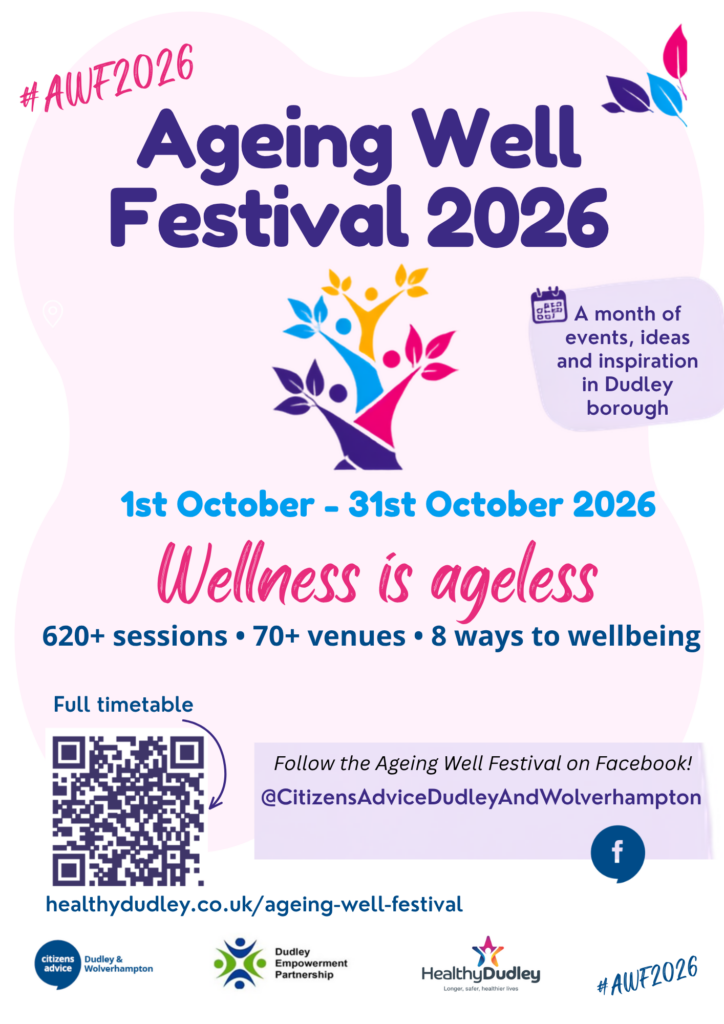
Taking place from 1 to 31 October 2026, the month-long festival offers an incredible 630 different sessions across more than 70 venues, giving people opportunities to get active, meet new people, learn new skills and look after their health and wellbeing.
Read all about it below and check out the full timetable to see what you can get involved with.
Ageing Well Festival
With the theme “Wellness is Ageless”, the festival brings together activities and opportunities from more than 150 local partners, including community groups, charities, leisure providers, libraries, health and wellbeing organisations and local services.
The Ageing Well Festival was established to support residents to live healthier, happier and more connected lives as they grow older.
This is the first year the festival is being led by Citizens Advice Dudley and Wolverhampton as part of Dudley Empowerment Partnership in collaboration with the Council’s Public Health team and an incredible network of statutory, voluntary and community partners from across the Borough.
The programme has something to suit a huge range of interests and abilities with many of the events being free to attend.
Residents can choose from walking, exercise and dance, as well as singing, crafts, gardening, games, films, digital skills, social groups and health and wellbeing sessions.
A key part of this year’s festival is a free and extensive leisure offer in October, giving residents even more opportunities to get active and try something new.
The programme includes opportunities to enjoy public swimming, gym use, fitness classes, racket sports and use of the running track at The Dell Stadium, with activities designed to help people become more active in a way that suits them.
Whether you already enjoys exercise or is thinking about trying something new, the festival provides opportunities to explore the wide range of ways residents can stay active and support their wellbeing.
The festival is organised around 8 Ways to Ageing Well, helping people to explore opportunities to:
- Be active
- Stay connected
- Keep your mind healthy
- Eat well and stay hydrated
- Develop healthy habits
- Look after your health
- Self-manage your health
- Be weather-wise
Citizens Advice and partners wants to showcase the incredible range of opportunities available across Dudley Borough, while encouraging people to try something they may not have considered before.
Whether you are looking to make new friends, become more active, discover a new hobby, learn a new skill or simply enjoy a cup of tea and a chat, there will be opportunities taking place throughout the borough.
All events listed in the programme are free and open to everyone, unless otherwise stated. Some activities may have specific eligibility criteria, require booking or have limited spaces, so residents are encouraged to check individual listings before attending.
As many activities are run by volunteers and community organisations, information is correct at the time it was provided by festival partners, but occasional changes may be necessary at short notice.
As part of Forward Carers continued mission to ensuring all communities are recognised, valued, and able to access support, we are committed to strengthening how we engage with and support unpaid Carers from migrant communities.
This work also forms part of our National Lottery-funded project to identify hidden Carers within communities across the West Midlands.
With this in mind, Research and Evaluation Lead at Forward Carers, Anna Lockley-Scott, has been working to discover more about the importance of identifying and supporting hidden Carers in Migrant Communities.
Here, Anna talks us through that work.
Identifying Unpaid Carers in Migrant Communities
In my role as Research and Evaluation Lead at Forward Carers, I recently presented in front of a team of advisers at the Refugee and Migrant Centre in Birmingham.
Among the people coming through their doors may be someone looking after a partner who is unwell, a parent supporting a disabled child, or a young person helping a family member to manage appointments and everyday life.
They may be doing many of the things we associate with being an unpaid Carer but never have used the word Carer to describe themselves.
These are some of the people we mean when we talk about ‘hidden Carers’. People who are providing unpaid care but have not yet recognised themselves as a Carer, been identified by services, or connected with the support available to them.
In my role at Forward Carers, I have been developing our relationships with organisations working alongside migrant communities.
The more conversations I have, the clearer it becomes that finding hidden Carers isn’t simply about translating the word Carer.
It is about helping people recognise the caring role in a way that makes sense within their family, culture and community.
Why might a Carer remain hidden?
There are around 5.7 million people identified as providing unpaid care through the 2021 Census. But we know that not everyone who provides care necessarily identifies themselves as a Carer.
There can be additional factors for people who have recently arrived in the UK that make their caring role less visible.
The word Carer may not have a direct equivalent in someone’s first language. People may not know that support for unpaid Carers exists or that it could be relevant to them.
Language can also make navigating health and support services more difficult, while cultural attitudes towards disability, mental health or asking for outside support can also influence whether somebody talks about their caring responsibilities.
This matters because remaining hidden can also mean missing opportunities for information, a Carer’s Assessment or other support that could make caring more manageable.
At the same time, it is important that we don’t define migrant Carers only by the barriers they may experience.
Migrant families and communities bring enormous strengths: strong family relationships, community networks, resilience, cultural knowledge and a commitment to supporting one another.
Our role is not to replace those strengths. It is to make sure people know that recognising themselves as a Carer can open the door to additional support.
Taking Carer awareness into communities.
If somebody doesn’t identify themselves as a Carer, they are unlikely to search for a Carers service.
My recent visit to the Refugee and Migrant Centre gave me an opportunity to talk directly with advisers who already have trusted relationships with migrant families.
Rather than expecting every Carer to find their own way to a Carers service, we can help the organisations they already know to recognise Carers and signpost them towards support.
I have also taken this conversation to the Birmingham Migration Forum, speaking with organisations working with migrant communities across the city.
Through these conversations, I have been raising awareness of Birmingham Carers Hub and explaining that support can be relevant to people with many different immigration circumstances.
This includes asylum seekers and people living and working in the UK on visas, who have no recourse to public funds.
We have also discussed practical ways to help people recognise and communicate their caring role.
For example, a Carer ID Card can provide a simple way for somebody to show that they are an unpaid Carer when attending a GP practice, hospital or other service. This could be particularly valuable for somebody who is less confident communicating in English.
Forward Carers is already working to make support more accessible.
Birmingham Carers Hub information is available online in several languages, including Arabic, Pashto and Romanian. Our wider work to identify Carers also increasingly involves working through community, health and voluntary-sector partnerships.
Recognising young Carers
A particularly important part of these conversations is recognising the children and young people who may be providing care within migrant families.
A young person might translate during appointments, help a parent understand letters or services, or take on other responsibilities at home.
Translation alone does not necessarily make somebody a young Carer. But it can be one of the signs that encourages professionals to ask more about what life is like for that young person.
Schools can play an important role in recognising this.
Connecting migrant organisations with schools and young Carer support provides another opportunity to make sure children and young people are not overlooked.
Where do we go next?
These conversations are a starting point rather than the end of the work.
We want to continue strengthening relationships with organisations across our service areas.
There are several opportunities we can explore next, including:
- working with trusted community organisations to develop culturally relevant messages about caring
- increasing the confidence of frontline advisers to identify and signpost Carers
- listening directly to migrant Carers about what would make services easier to access
- exploring how language support can be strengthened
- looking at how the Carer ID Card could help people communicate their caring role in health and other settings
Most importantly, we need to listen.
If we want more people to recognise themselves as Carers, we need to understand how caring is described and experienced within different communities.
We already have services, partnerships and practical support that can make a difference to Carers’ lives.
The next step is making sure more people can see themselves in that offer whilst knowing that it is there for them.
The State of Caring is the UK’s most comprehensive regular research into the lives and experiences of unpaid Carers. It is used as a vital source of evidence not only by Carers UK, but by many other organisations including Government, local authorities, health and social care services, charities and carers groups.
Carers UK has been able to use Carers’ responses to the last year’s survey to contribute to:
- The UK Government-commissioned review of adult social care in England
- Set out Carers UK’s vision for the NHS and how it can better support Carers
- Call for a reform of Carer’s Allowance overpayments, leading to UK Government committing to reviewing thousands of overpayments cases
- Respond to the Government review of Personal Independence Payments
- Continue to campaign for paid Carer’s leave
- Submit evidence to the State Pension Review
- Publish new reports and policy briefings on topics including the cost of caring and the reasons why Carers end up giving up paid employment to care
In addition, the results from last year have been discussed on national TV shows including BBC Breakfast and Good Morning Britain, reaching millions of people and helping to raise the profile of caring.
The State of Caring 2026 survey is now open, and will be live until 11.59pm, Sunday 9th August 2026. The survey will take around 30 minutes to complete but you can skip some questions if you are limited for time. Start the survey here.
Other Ways to Have Your Say
- Sign a petition: You can call for action from the UK Government or UK Parliament by creating and submitting an e-petition. There are some current petitions that are relevant for unpaid Carers. If an e-petition receives 10,000 signatures, it will receive a response from the Government and if it receives 100,000 signatures it may be debated in Parliament. Take a look.
- Join our Carers Voice programme: You can decide on your level of input, whether you want to respond to surveys or consultations, join in person workshops and focus groups or share your story. Join today.
- Share your story : Sharing your caring experience can help other unpaid Carers feel less alone. It can offer encouragement, practical tips from your lived experience, or you could be a source of hope and inspiration. For those who have not recognised themselves as a Carers, your story, might help them identify with you and seek support. Use this form to help you write your Carer story.
Local support can make a significant difference to unpaid Carers’ wellbeing, confidence and ability to continue caring.
Through Carer Friendly Dudley, Adult and Young Carers can access practical support, wellbeing opportunities and information that helps them navigate the challenges of caring and live a full life alongside their caring role.
Forward Carers is commissioned by Dudley Metropolitan Borough Council to deliver Adult Carers Wellbeing, in partnership with Dudley Carers Hub, and also Dudley Young Carers services.
For registered adult Carers, this includes wellbeing conversations, groups and activities designed to reduce isolation and improve wellbeing. For Young Carers, our service provides opportunities that help them build confidence, make friends and take a break from caring.
Our Impact Review 2025 highlights the support provided during the past year and the difference it has made for Adult and Young Carers across Dudley, alongside the wider work being delivered by Forward Carers across the West Midlands and South-West.
Why do we produce an Impact Review?
At Forward Carers, we believe that measuring impact is about much more than counting activities or reporting statistics.
Our Impact Review helps us understand whether support is making a difference in Carers’ lives, what we’re learning and where we can improve. It also helps us remain accountable to commissioners, funders, partners and the Carers who help shape our services through their feedback and experiences.
What does the review tell us about Dudley?
During 2025, the Dudley Adult Carers Wellbeing Service supported 308 registered Carers, delivering 1,338 one-to-one contacts and casework sessions, completing 209 wellbeing assessments and recording more than 1,000 attendances across 140 groups and wellbeing activities.
At the same time, Dudley Young Carers supported 321 Young Carers, delivered 26 group sessions and activities, recorded more than 550 attendances, and worked with schools across the borough to improve identification and access to support.
Supporting Adult Carers
For adults, the Dudley Adult Wellbeing Service for registered Carers often starts with helping people recognise that their own wellbeing matters too, and that support is available.
Alongside information and wellbeing conversations, the service helped Carers access practical advice and specialist support. During the year, Carers were supported to identify welfare benefit entitlements worth an average of £98.89 per week, helping people manage some of the financial pressures that can accompany a caring role.
One Carer shared:
“This has made a huge difference to my mental health and wellbeing, I feel less isolated, heard and feel that I’m not alone anymore.”
The review also highlights the experience of a Carer supporting her mother who was living with dementia. Through the service, she accessed benefits advice, practical support and opportunities to connect with other Carers, helping her feel less isolated and more confident.
Supporting Young Carers
Young Carers often balance caring responsibilities alongside education, friendships and growing up.
Dudley Young Carers provides opportunities for young people to take a break from caring, spend time with others who share similar experiences and access support when they need it.
During the year, Young Carers took part in a range of activities, trips and group sessions designed to build confidence, reduce isolation and create opportunities to have fun.
One Young Carer said:
“It was nice to have a break from caring and just have fun.”
The service also continued to develop the Carer Friendly Schools programme, helping schools better identify and support Young Carers. By the end of the year, 38 schools had engaged with the programme, helping raise awareness and improve support for pupils with caring responsibilities.
Creating Additional Value
Alongside commissioned support, Carer Friendly Dudley secures additional funding, resources and opportunities that helped extend support available to local Carers.
For our Young Carers service, this included Holiday Activities and Food (HAF) funding to deliver 200 funded sessions for 70 Young Carers, free Merlin attraction tickets for 60 Young Carers and family members, and Christmas presents worth £9,600 through Cash4Kids Mission Christmas. More than 250 additional session spaces were also funded for Young Carers.
Across the wider service, grants and in-kind gifts worth more than £10,000 were secured to increase support available to Carers, while partnerships enabled 43 Carers to access free bus travel, data SIMs and overnight breaks.
These additional opportunities help remove barriers, reduce financial pressures and ensure more Carers can access the support and experiences available to them.
Part of a Wider Picture
While this article focuses on our Carer Friendly Dudley activity, these services form part of Forward Carers’ wider network of support across the West Midlands and South-West.
The review provides an opportunity to explore both the local impact of services delivered in Dudley and the wider contribution that Carer support makes across communities.
Thank You
Thank you to the Carers, staff, volunteers, partners, commissioners and funders who have contributed to supporting unpaid Carers across Dudley during the past year.
Your insight, commitment and collaboration continue to help ensure Carers can access the information, advice and support they need.
Read the Impact Review
Whether you’re a Carer, a partner organisation, a commissioner or simply interested in supporting unpaid Carers, we invite you to explore the full Impact Review and learn more about the difference being made across Dudley and the wider Forward Carers network.
As part of our Carers Week 2026 activities, members of the Dudley Wellbeing Service Dementia Carers Group were invited to a memorable day out at Aston Hall, followed by a beautiful afternoon tea at the Aston Tavern.
For many Carers, opportunities to take time out, connect with others and enjoy a day away from their caring responsibilities can be rare.
This trip provided a chance to do just that, while sharing the experience with people who truly understand the realities of caring for someone living with dementia.
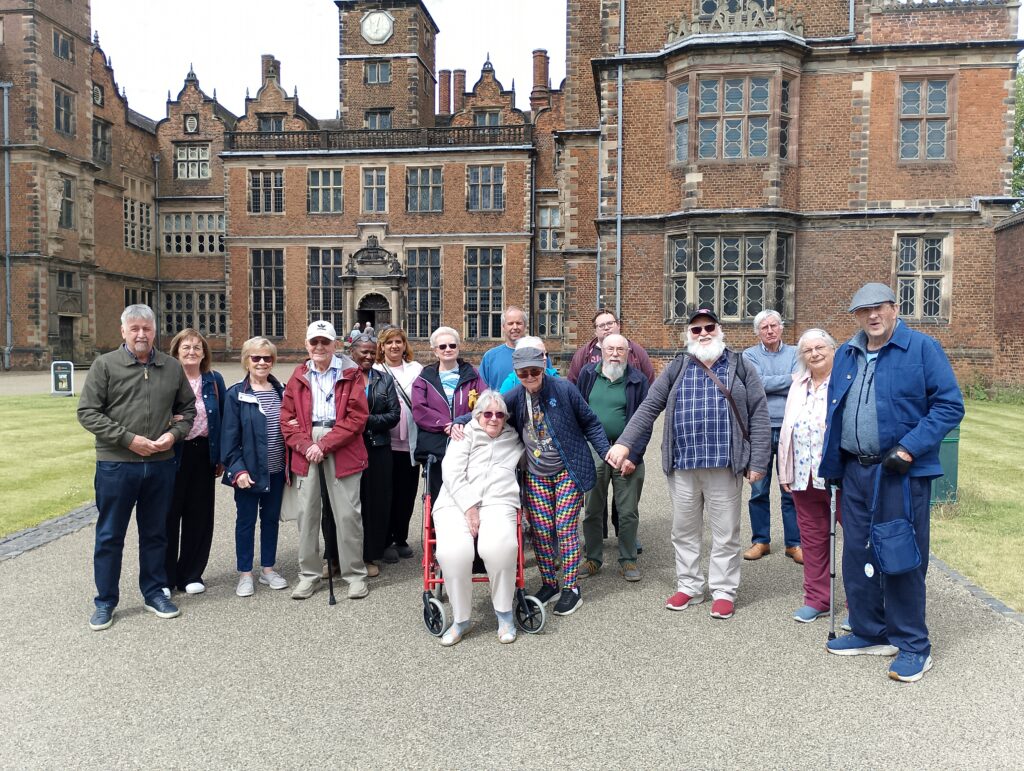
The group spent the morning exploring the stunning Aston Hall, discovering its rich history and admiring the beautiful surroundings.
The visit sparked conversations, laughter and shared memories, and the atmosphere was jovial throughout.
The day continued with afternoon tea at the Aston Tavern, where staff went above and beyond to make the group feel welcomed, valued and cared for.
Many Carers were deeply moved by the experience, with several brought to tears upon realising this occasion had been organised just for them.
One overcome Carer noted:
“It’s so beautiful. We never get treated like this. I can’t believe this is for us.”
The trip was particularly meaningful for those who attended alongside the person they care for. Being part of a group like this provides Carers confidence to continue doing everyday activities together.
Another Carer explained:
“Coming out with the group helps me feel like we can do normal things again. I know there will always be someone to help if I need it. If I need to pop to the loo or just take a moment, there’s no judgement and someone is always there to support us.”
This sense of understanding, safety and mutual support is at the heart of the Dementia Carers Group.
Carers know they are among people who understand their experiences, and that they do not have to face challenges alone.
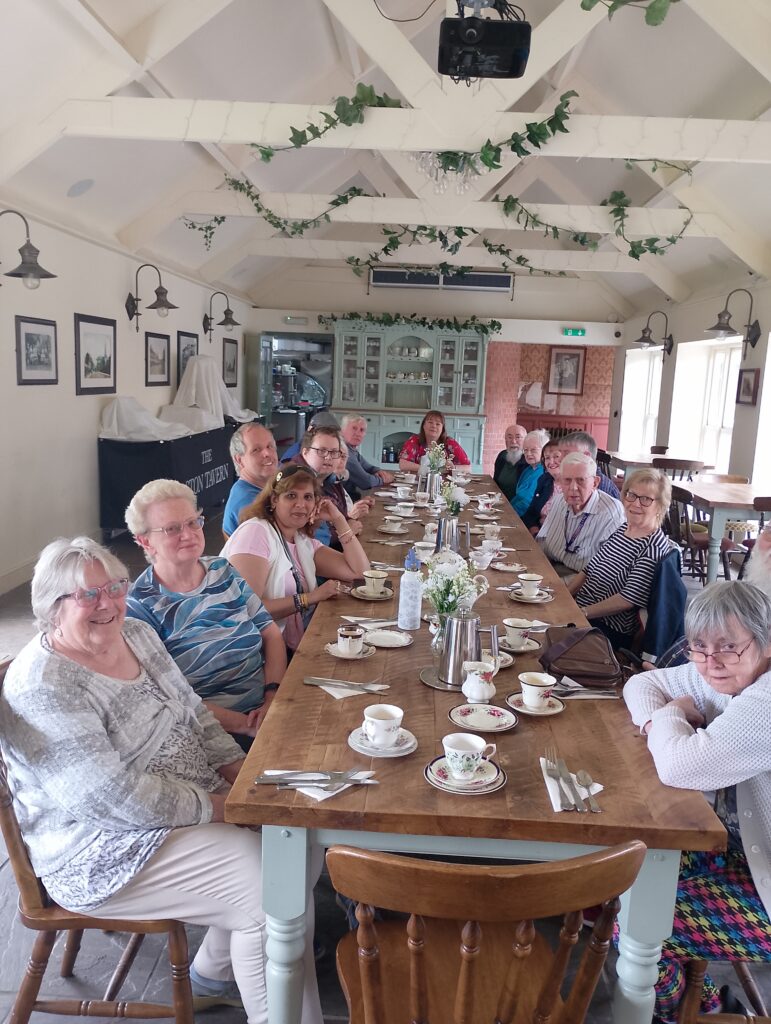
The trip highlighted the importance of providing opportunities for Carers to connect, socialise and enjoy positive experiences together.
As well as creating lasting memories, days like these help reduce isolation, improve wellbeing and remind Carers that they are valued members of their community.
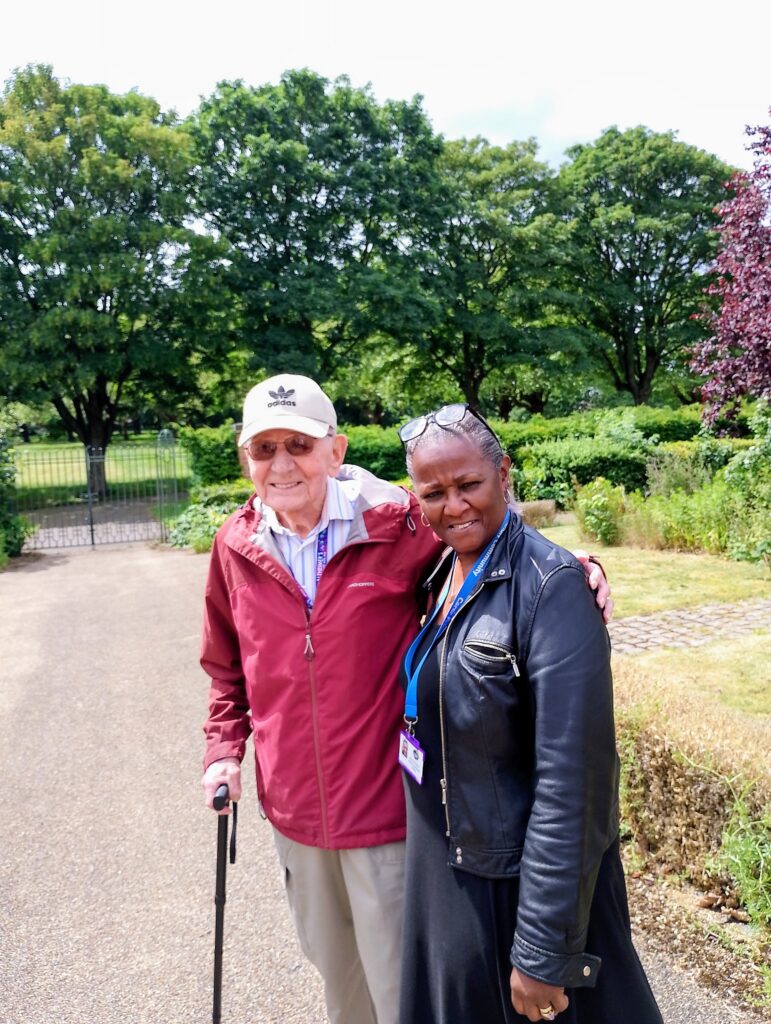
A huge thank you to the team at Aston Tavern for their outstanding hospitality and to everyone who joined us for making the day so special.
After another fantastic Carers Week, we will continue to recognise the incredible contribution unpaid Carers make every day and the importance of ensuring they have opportunities to take time for themselves, connect with others and access the support they deserve.
Check out more activities and groups around Dudley on our What’s On Page to see what is available to you.
National Volunteers Week is upon us, running from Monday 1st to Sunday 7th June!
Everyone at Forward Carers would like to extend a huge thank you to the volunteers who give their time, experience and expertise to support unpaid Carers!
Volunteers strengthen the work of Forward Carers and helps us make a significant difference to unpaid Carers across the country.
Many of our volunteers have a personal connection to caring. They know first-hand or via family what it means to support someone who relies on you, and the challenges that can come with it.
That experience often motivates them to give something back and help other Carers access the support, information and understanding they need.
Our Carer Ambassadors epitomise this.
They help raise awareness of unpaid Carers and the caring role within communities, workplaces and services.
Hearing from somebody who has been in a similar situation can be what helps a person recognise themselves as a Carer and realise support is available.
Alongside our volunteers, we are also fortunate to work with hundreds of Carers and former Carers through our Carers Voice programme.
By sharing their experiences through surveys, focus groups and consultations, they help us understand what Carers need and how services can improve.
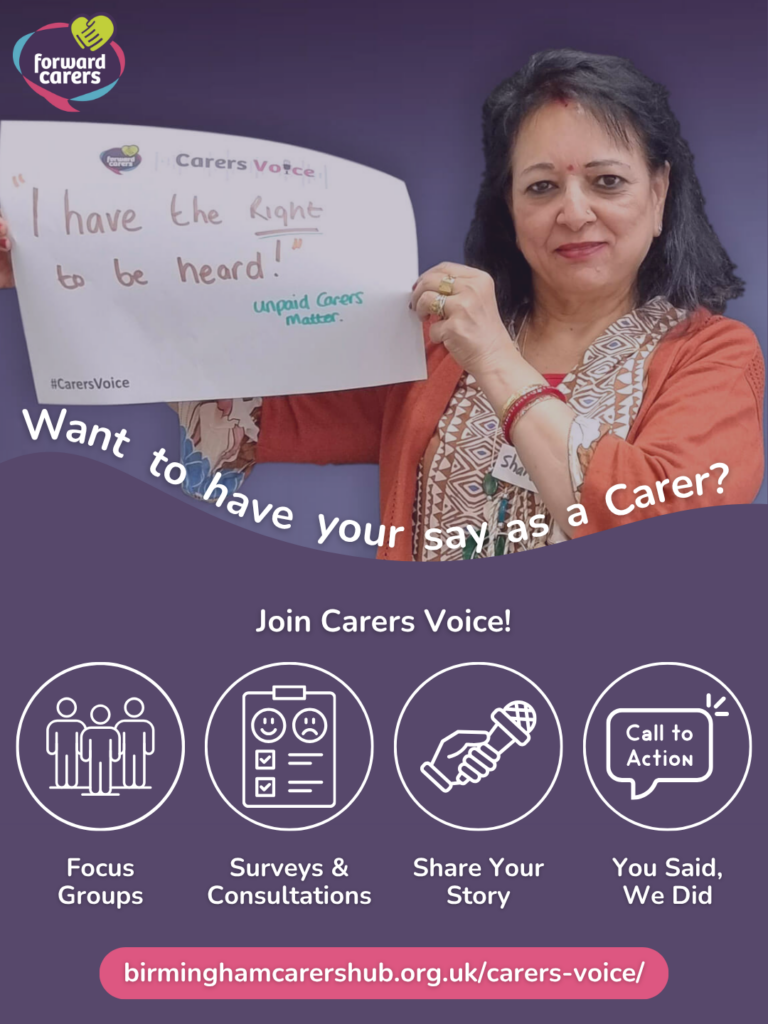
Volunteers also play an important role within our local services.
During Volunteers’ Week, we wanted to shine a light on two volunteers from the Dudley Young Carers service who each each contribute to the delivery of support in their own unique way.
You can read about what they enjoy about their roles, below.
To all of our volunteers, Carer Ambassadors and everyone who contributes through our Carers Voice programme, thank you. Your time, insight and experience help us improve what we do and reach more Carers.
Debbie’s Volunteering Story
Why did you start volunteering with Dudley Young Carers?
“I started volunteering with Dudley Young Carers when my daughter Sam moved over to Forward Carers. She needed some extra help at the Youth Clubs, so I offered to lend a hand when needed. At first, I thought it would just be occasional support, but I quickly became more involved. I now have my lanyard and attend every club!”
What sort of things do you do?
“I mainly help in the kitchen, preparing and cooking meals for the Young Carers. I know how important it is for them to have a warm meal and feel looked after when they come to club. I also help with setting up before sessions start and tidying away afterwards, making sure everything runs smoothly and the space is welcoming for the Young Carers and their families.”
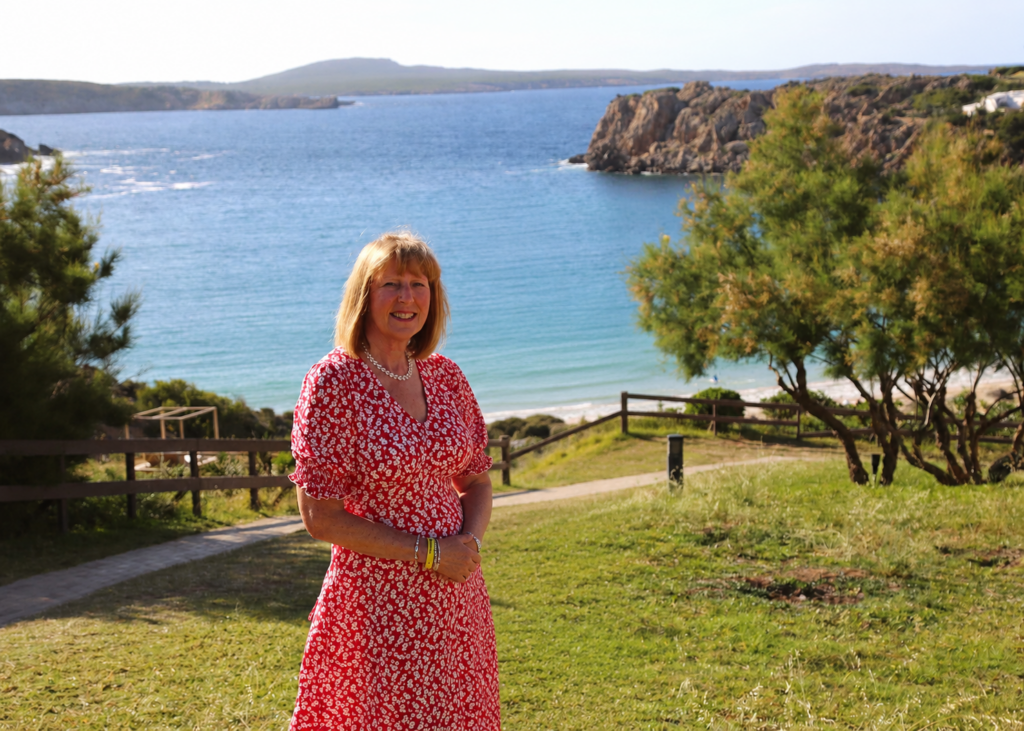
Debbie, one our volunteers at the Dudley Young Carers Service
What do you enjoy about it, and what have you learnt or what skills have you developed?
“I really enjoy meeting the Young Carers and their families and having conversations with them. Having gone through cancer myself, and also having been a Carer for my husband when he had cancer, I feel I can relate to some of the challenges families may be facing. It helps me offer understanding, kindness and support in a way that feels personal and genuine.
Through volunteering, I have also built my confidence and developed new skills. I have completed my food hygiene training through Dudley Young Carers, which has helped me feel more confident preparing meals safely.”
What would you say to someone thinking about volunteering?
“I would thoroughly recommend it. You get so much out of volunteering, and it feels really rewarding to know you are helping Young Carers and their families. Even giving a small amount of time can make a big difference, and it is a lovely team to be part of.”
Caitlyn’s Volunteering Story
Why did you start volunteering with Dudley Young Carers?
“I am a Carer myself and was with Dudley Young Carers and they helped me a lot, so I thought I could offer my help back.”
What sort of things do you do?
“I do loads of crafts with the children. It can be anything like colouring or making things such as keyrings or loom bands (though they do get everywhere!). I also help out on trips as an extra pair of hands.”
What do you enjoy about it, and what have you learnt or what skills have you developed?
“I enjoy being able to help the children with what they need or if they need help with a task. I guess a skill I’ve learnt is understanding children and what they need.”
What would you say to someone thinking about volunteering?
“Do it. It’s fun, you get to do things you didn’t think you were able to do and you get to make friends!”
Volunteer with us
Debbie and Caitlyn came to volunteering through different experiences, but both share something in common: caring has been part of their lives and they wanted to use that experience to help others.
Their stories reflect something we see across Forward Carers. People often get involved because they understand the difference that support, understanding and the right opportunities can make.
Thank you again to all our Volunteers, and we will continue to work tirelessly to support unpaid Carers across the UK.
If you are interested in volunteering with Forward Carers, you can find out more about current opportunities, we’d love to hear from you.
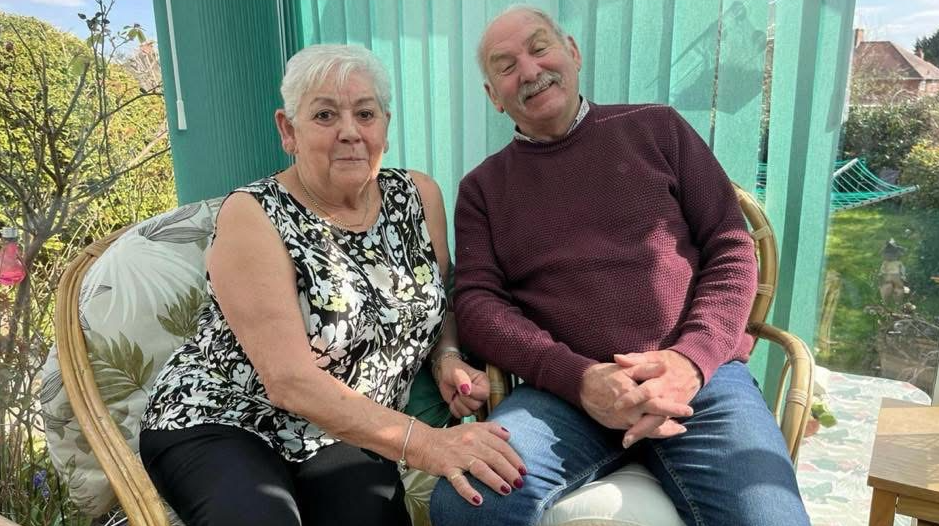
Below you can read Marilyn’s caring story. With Dementia Action Week upon us, she shares her experience of caring for her husband Bob following his dementia diagnosis and why it’s so important for unpaid Carers to seek support before reaching crisis.
Marilyn and Bob’s Dementia Journey
In 2017, when Bob was just 64, he was diagnosed with mixed dementia. Bob was not particularly concerned by the diagnosis and did not believe there was anything seriously wrong.
I was not shocked, as two years before this I had noticed Bob was forgetting things and could not remember how to drive to familiar places. Although I was not surprised, it was still hard to hear. I worried about the future and how quickly he might decline.
There is nothing that can be done. There is no light at the end of the tunnel. I knew he would never get better.
Life after Bob’s diagnosis
Life carried on pretty much as normal. The diagnosis did not really change anything; it just confirmed my suspicions. Bob had good days and bad days and can struggle to find the right words.
Bob was a chiropodist and would drive to the houses of his clients. When he started to really struggle to find his way there, I would go with him to give him directions. Then it became necessary for me to actually drive him to his client appointments. This teamwork was successful until Bob retired at the age of 67.
When Bob retired, I did my best to keep us both busy. We went to Dementia Cafés, concerts and get-togethers to keep his mind active and stimulated.
Over the last 12 months, Bob has really declined. He was not sleeping and wanted to walk all the time. I had to keep the doors locked, and the strain of it all was exhausting.
The day everything changed
The breaking point came when we went to our caravan in North Wales. Bob insisted on going out and taking our French bulldog, Bella, with him. I could not contain him or persuade him to leave Bella behind. He said he would only be ten minutes.
After fifteen minutes, I knew he had got lost.
The owners of the caravan park helped me look for him, and I ended up calling the police. An hour and a half after he left the caravan, the police found him, and they were very kind and understanding. Tragically, Bella had died during the walk.
I was distraught, and Bob was extremely distressed and confused. I felt overwhelmed by the situation, but I also knew he did not understand what had happened. Of course, I could not blame him.
Bob did not fully understand what had happened to Bella, which made an already devastating situation even harder. This came during an already painful time. I had lost my dad the previous April. I felt like I was losing Bob, and then I had just lost my little Bella.
Reaching Carer Crisis
This was the last straw. I could not take any more, and I ended up in carer crisis. I went for a Carer’s meeting and just burst into tears.
Dudley Carers Hub was amazing. They could see I was on my knees, so they organised emergency respite.
Later, I had to make the devastating decision for Bob to move into permanent residential care, which I now fund.
I was not sleeping. I had no choice. It was heartbreaking decision.
Bob’s life now
Since September last year, Bob has been living in a care home that suits him well. The care team have adapted to his needs and understand his behaviour.
Despite his dementia, Bob remains active and surprisingly nimble, and the care team work hard to keep him safe while supporting his independence!
I visit Bob most days. Thankfully, he still remembers me, although he no longer remembers any of our family or friends that he has known for years.
We had such a full, happy life together. We had a house in Spain, we sailed in Corfu, and went on cruises. I am so grateful to have those memories to hold on to, although Bob sadly has no recollection of them.
Caring for someone with dementia feels like a living grief to me. The person is still alive, but the Bob I used to know no longer really exists.

Why I now support other Carers
I keep myself busy by going to Knit and Natter, the Dementia Café and Carer groups. I run a monthly Carer group and offer support to other Carers as much as I can, encouraging them to seek support.
I cannot help Bob much more now really, and I just think there are so many Carers out there at their wits’ end. I want to do something to help other people who are in the same position as me.
I still have bad days. I got up the other morning, heard some music on the radio and started crying, and I just could not stop.
The support I have received
In addition to having support from Dudley Carers Hub, I have also had help from Dudley Adult Wellbeing Carers Service.
Mandy has been great. I attend her meetings where she provides advice and brings in expert speakers. I have also enjoyed the trips she has organised for Carers.
I also want to say a special thanks to Dudley Me Myself and I group, and Caroline Millington who has been brilliant, and who gave us great support throughout our journey and still do now.
My advice to other Carers is to accept help and do not let yourself get to crisis point before asking. Support is available, and no Carer should have to cope alone.
Sharing your Caring Story
If, like Marilyn, you would like to share your caring story to help other Carers, please complete the form below.
We can use an image from a photo library and change your name if you would prefer to remain anonymous.
Caring for someone you love can be one of the most rewarding roles you’ll ever take on, but it can also feel overwhelming, especially when you’re trying to navigate complex systems, finances, and future planning on your own.
A lot of these feelings might be new to you, and that’s why workshops and group sessions are such an important part of the support available to Carers in Dudley.
They’re not just about information, but they also help build confidence and help Carers live their lives to the fullest.
More than just information
We know that many Carers spend months, or even years, trying to figure things out on their own. Whether it’s understanding benefits, planning for the future, or knowing your legal rights, it can feel like there’s no clear starting point.
Our workshops are designed to change that.
They provide:
- Practical guidance in a supportive environment
- The chance to ask questions and get tailored advice
- Space to connect with other Carers who understand
This can be instrumental for Carers in breaking down complex topics into clear, practical guidance, these sessions can:
- Reduce uncertainty and anxiety about the future
- Support emotional wellbeing by offering reassurance and clarity
- Help you feel more prepared and in control

Real impact for Carers
We’ve already seen the difference that this kind of support can make.
Carers who have attended previous sessions have accessed wellbeing support, received help to understand what benefits they may be entitled to, and been supported to maximise their income, making day-to-day life a little easier during a time when many households are under real financial pressure.
One Carer shared:
“Thank you for the support. We did not know we were also entitled to these benefits. These will help with paying for food and bills because everything has become really expensive.”
This kind of feedback shows how workshops can have a direct impact, building knowledge of the support that is available for Carers.
Whilst not all workshops focus on the financial support you could be entitled to, they can all support you to improve your life as a Carer.
Upcoming workshops in Dudley
We’re continuing to build on this support with a series of free workshops at Brett Young Carers Hub, Old Hawne Lane, Halesowen, B63 3TB:
- Legal Power of Attorney Workshop
Friday 1st May 2026 | 10:00am – 12:00pm
Arrivals from 9:30am - Planning for the Future Workshop
Monday 11th May 2026 | 10:00am – 12:00pm
Arrivals from 9:30am - Understanding Welfare Benefits and Finances for Carers
Wednesday 20th May 2026 | 10:00am – 12:00pm
Arrivals from 9:30am
These in-person sessions offer a welcoming and supportive space for Carers to learn, ask questions, and connect with others.
Please feel free to join!
Our virtual workshops
We also know that not every Carer is able to attend in person.
That’s why we also run virtual workshops.
- Understanding Welfare Benefits and Finances for Carers (Virtual)
Monday 22nd June 2026 | 10:00am – 12:00pm
Whether in person or online, these workshops are about more than learning.
Check out more of the events happening in Dudley on our What’s On Page below!